NYU Abu Dhabi
Library Navigation
Redesign
SCROLL
Deliverable
Product, key visuals,presentation and budget breakdown
April 2024
Collaborators
Elora Trotter & Ana Maidana
This project was the culmination of Goffredo Puccetti's Wayfinding course, the first University-level interdisciplinary course on Wayfinding Design. Inspired by the Wayfinding design strategies of David Gibson, Yo Kaminagai, and Andrew Mead, we used ethnographic research methods to map the flow of the school library and develop high-quality signage and interior design solutions to address student frustration with noise levels and room capacity.
The product
A complete library
wayfinding system
My role
As project manager, I set timelines for the team, coordinated the presentation, and created the interior design solutions. I also completed an edit pass on the final signage mockups and provided illustrations that complemented student-led critiques of NYU's main library.
How can we direct students to the right place to study?
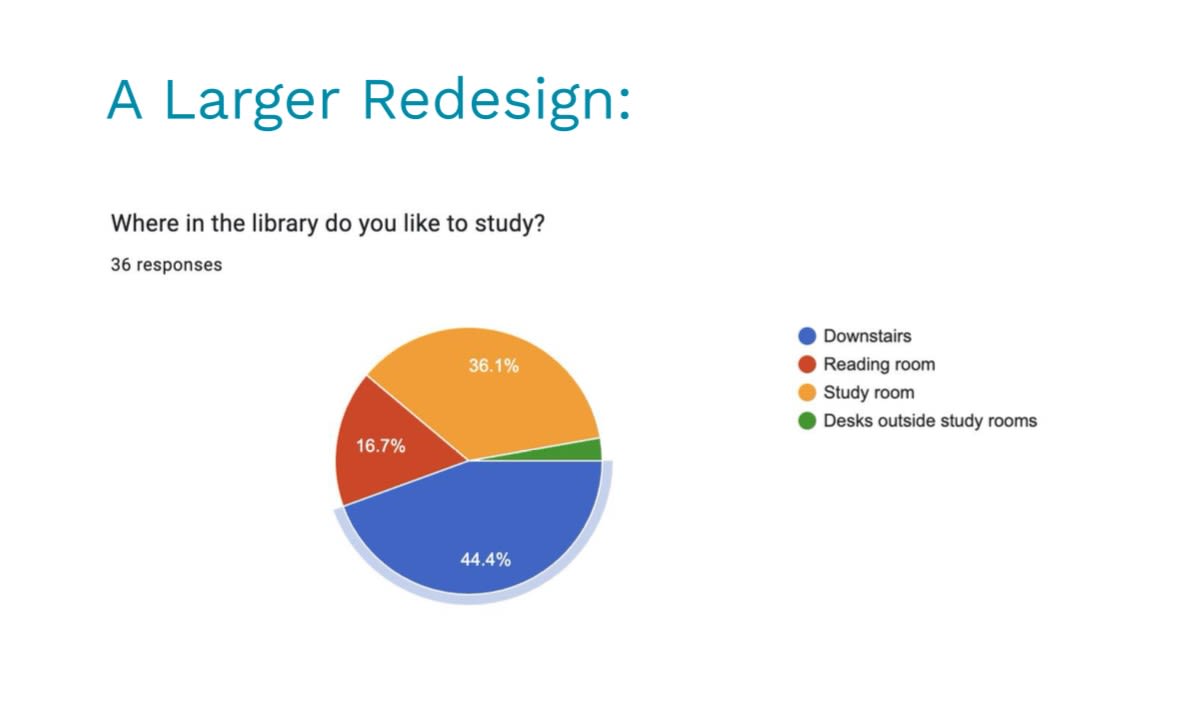
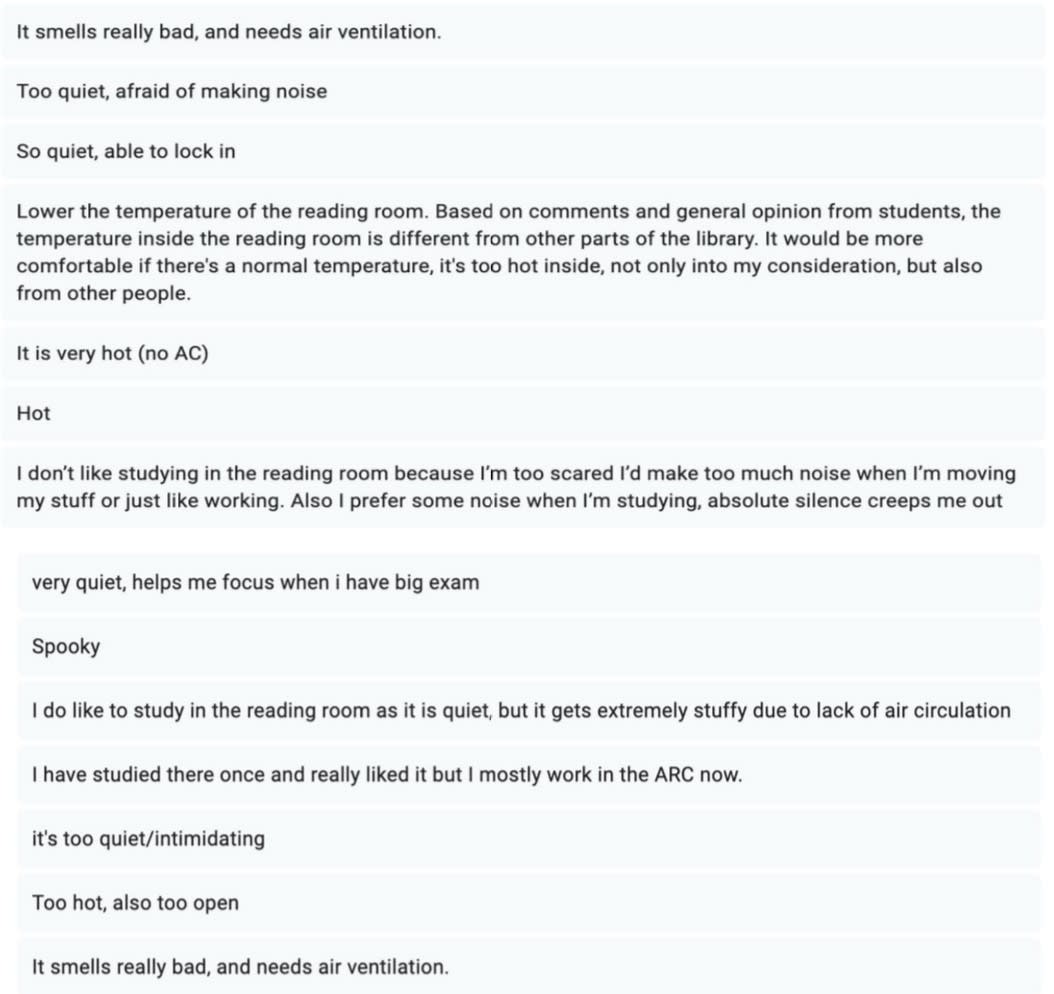
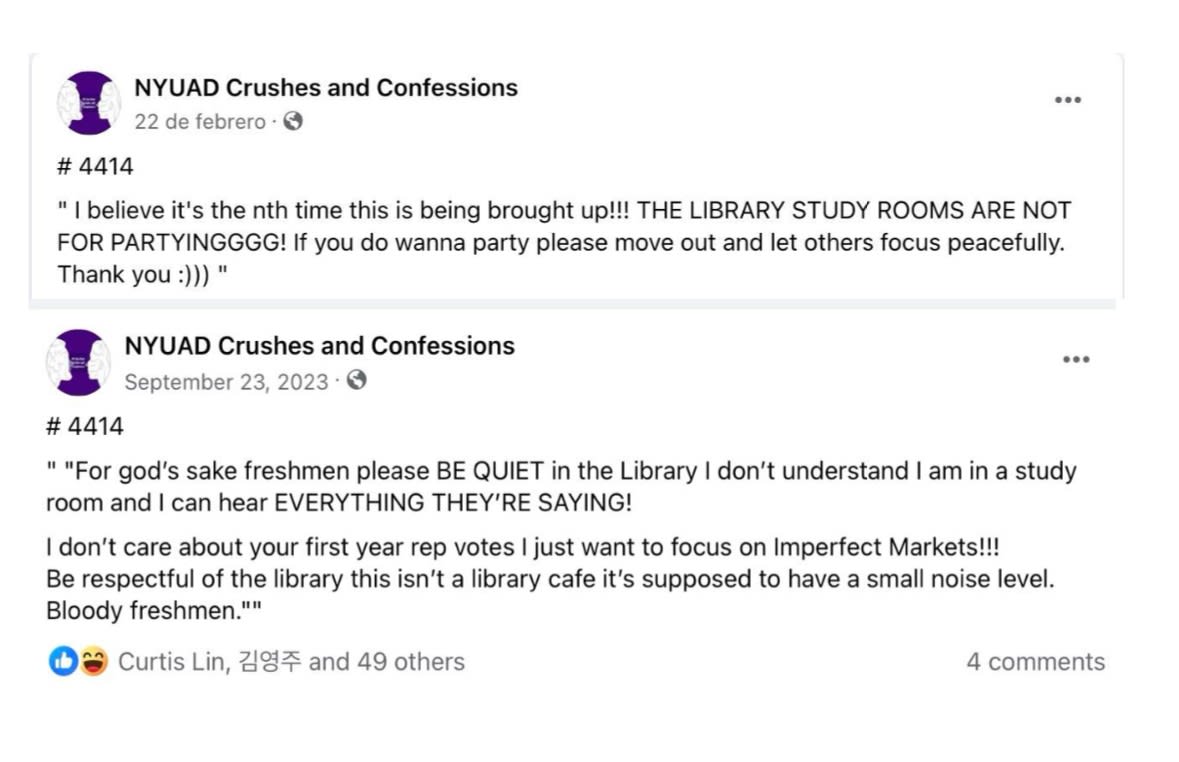
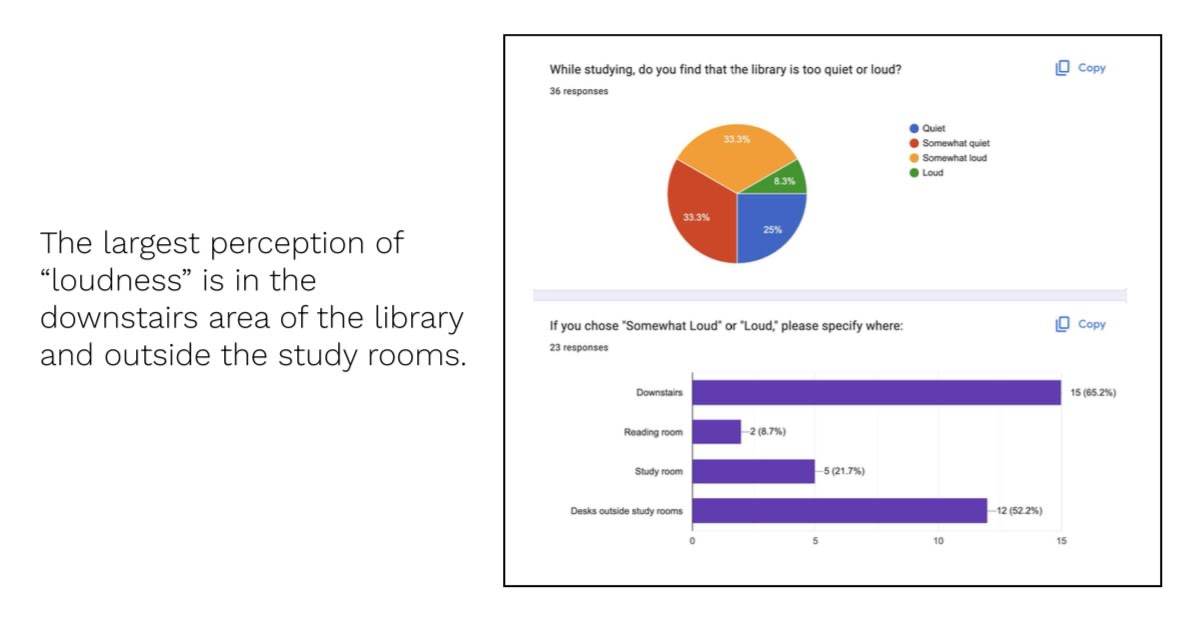
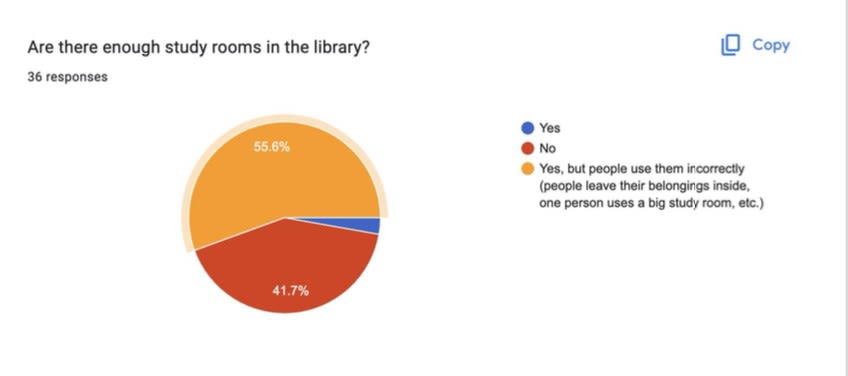
We conducted user interviews, anonymous surveys, and observed social media posts. We identified two major findings that directed our research question.
1. The library flow is confusing
2. Students percieve no capacity for silent study.
In our pitch, we presented our research to argue for the
importance of a new Wayfinding system that would directly address
these findings.
Directional Signage
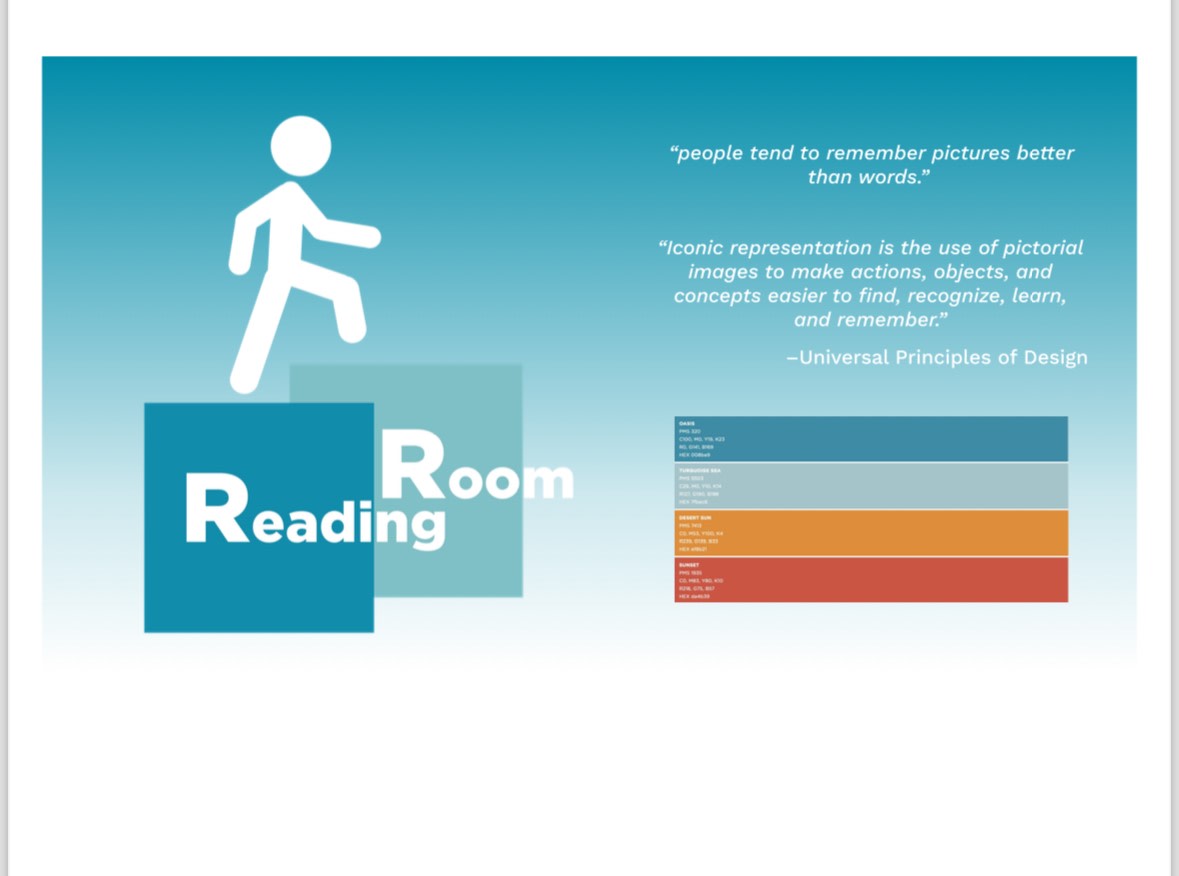
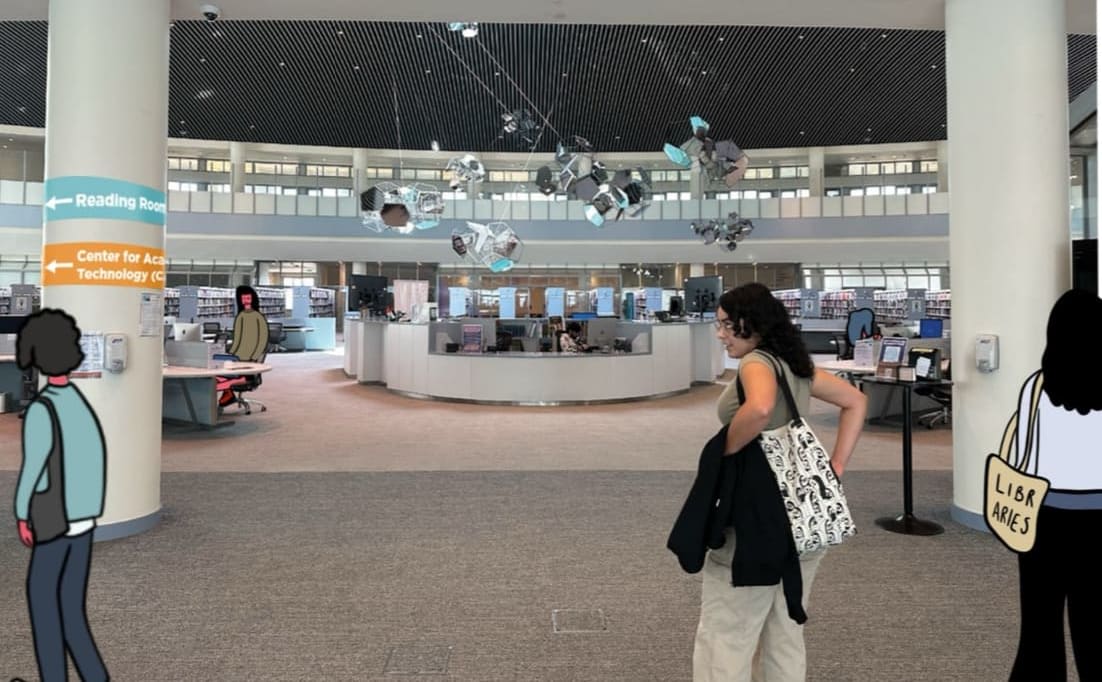
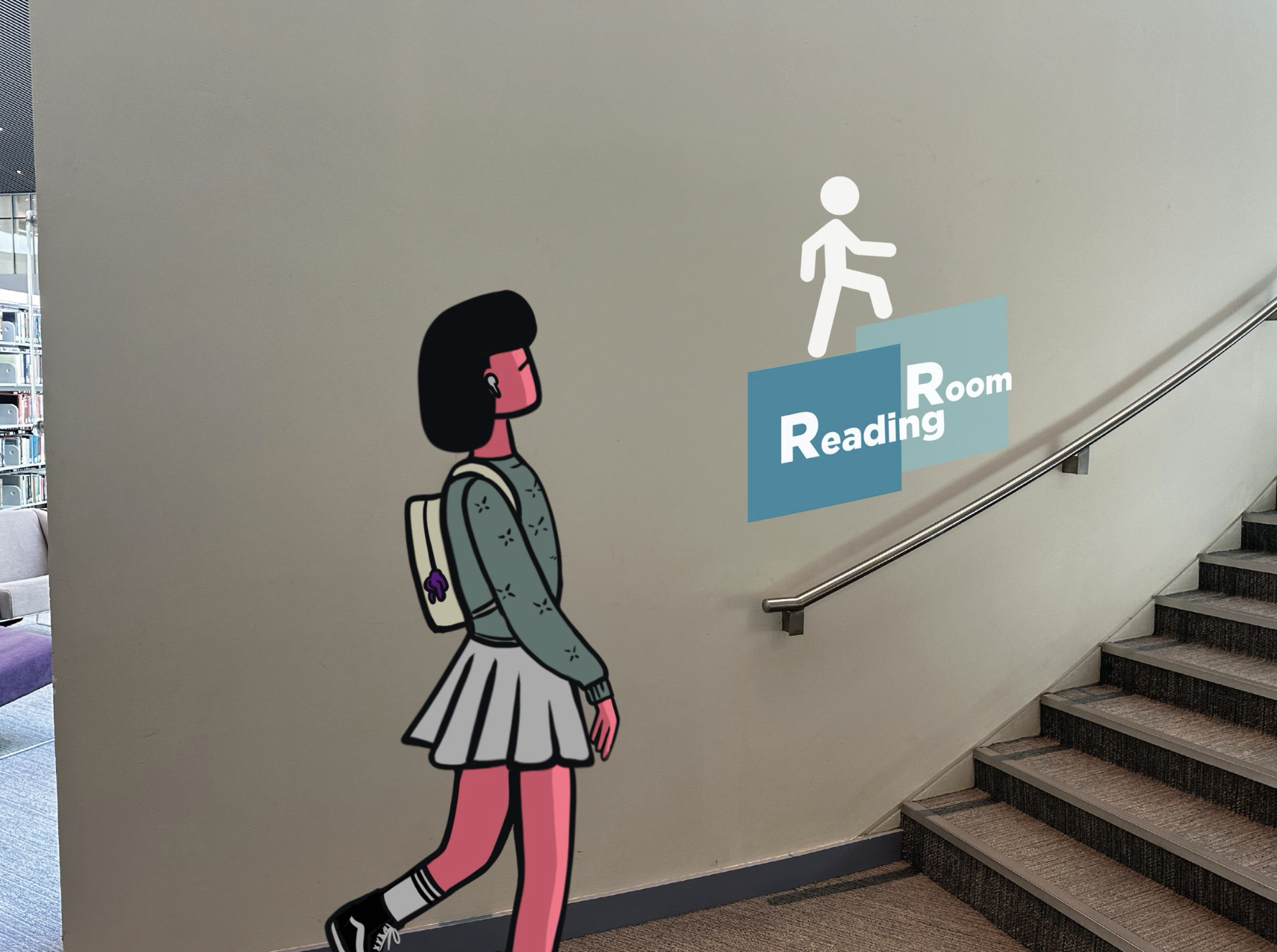
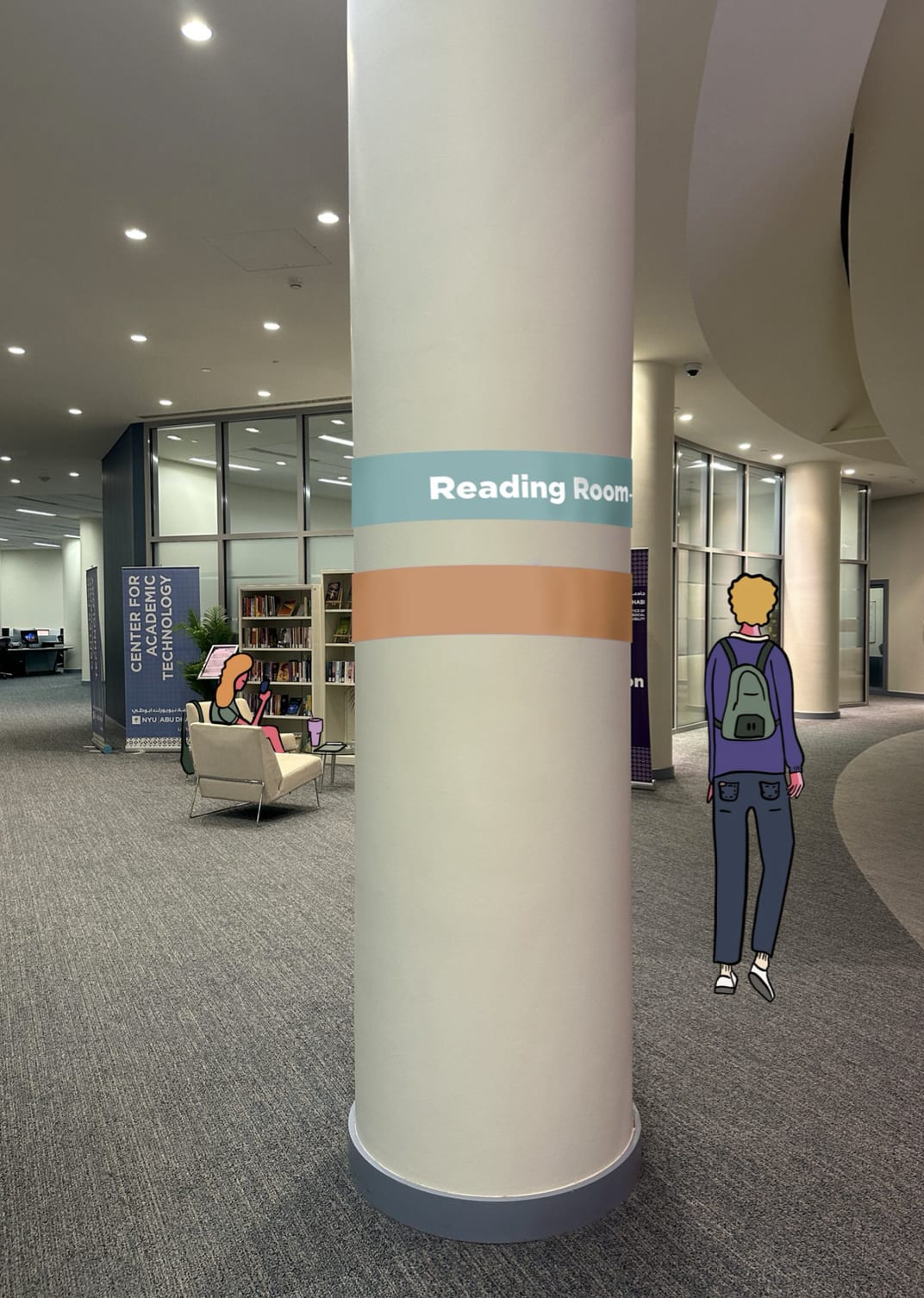
Our first intervention introduced directional signage that seamlessly blends with the library’s design, guiding students to spaces that match their preferred noise levels. Inspired by Anrew Mead's artistic approach to the Dubai Metro system—where design integrates harmoniously with architecture—we developed a system of pillar-based vinyl navigational signs. For the downstairs navigators, the signs feature vibrant colors drawn from the school’s palette, creating an inviting and dynamic feel. As students move deeper into the library, the colors gradually shift to more muted tones, reflecting the transition to quieter, more reflective spaces.
Regulatory Signage
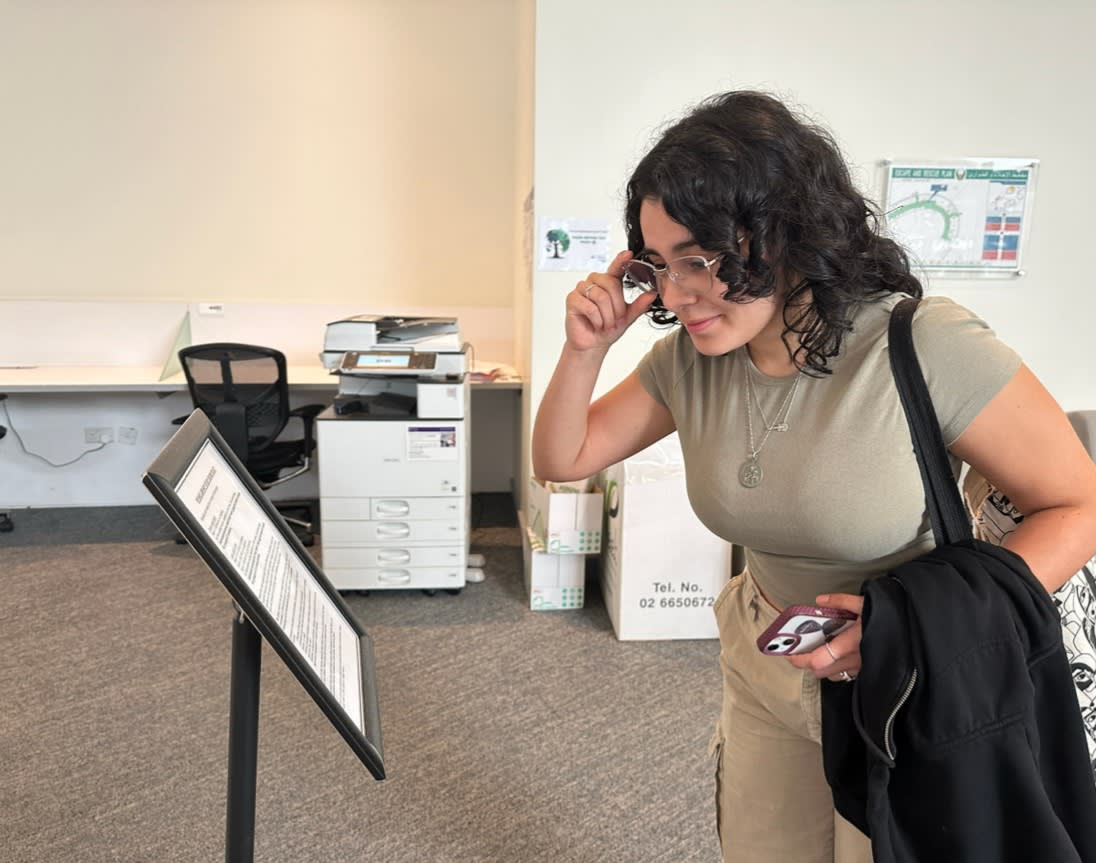
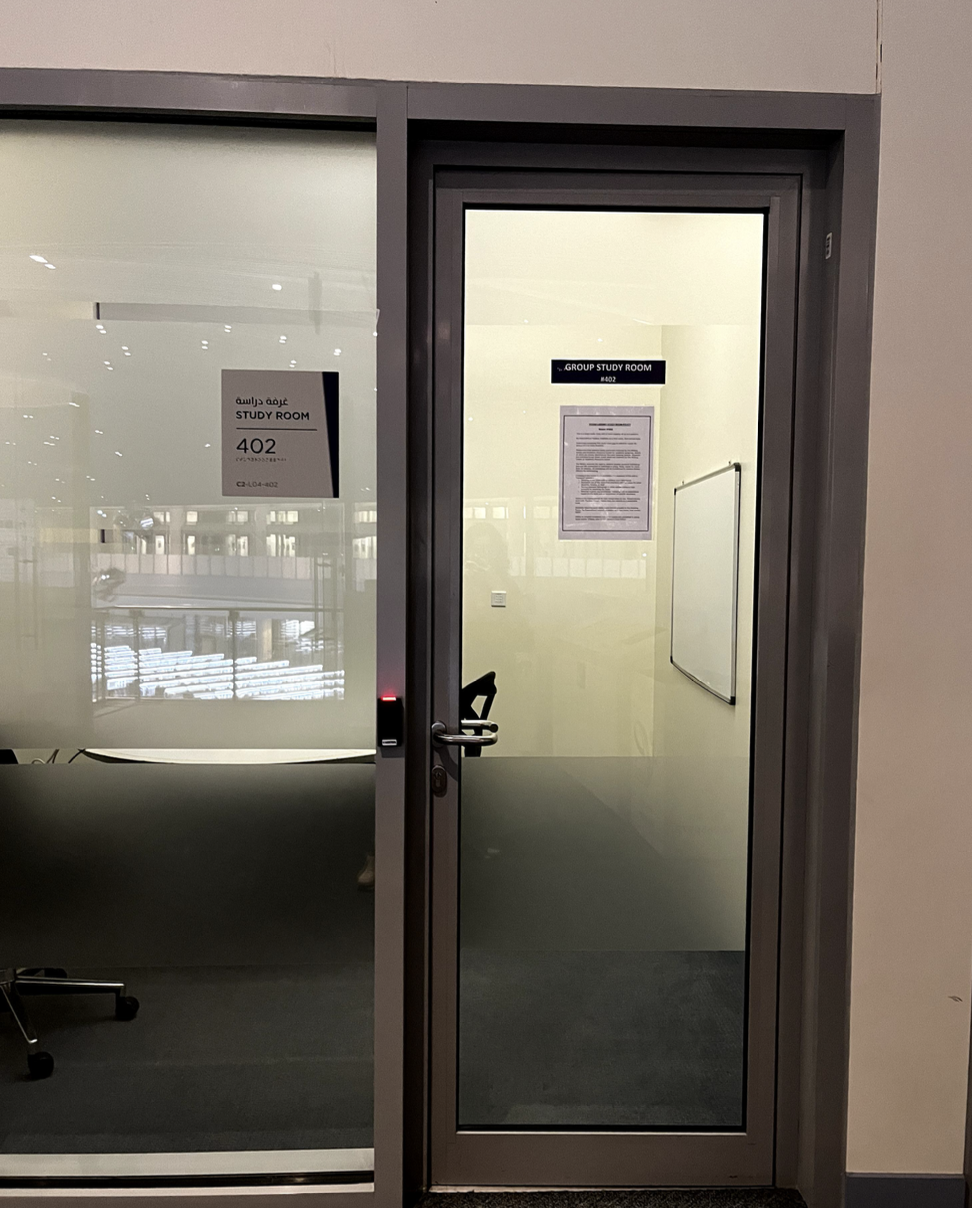
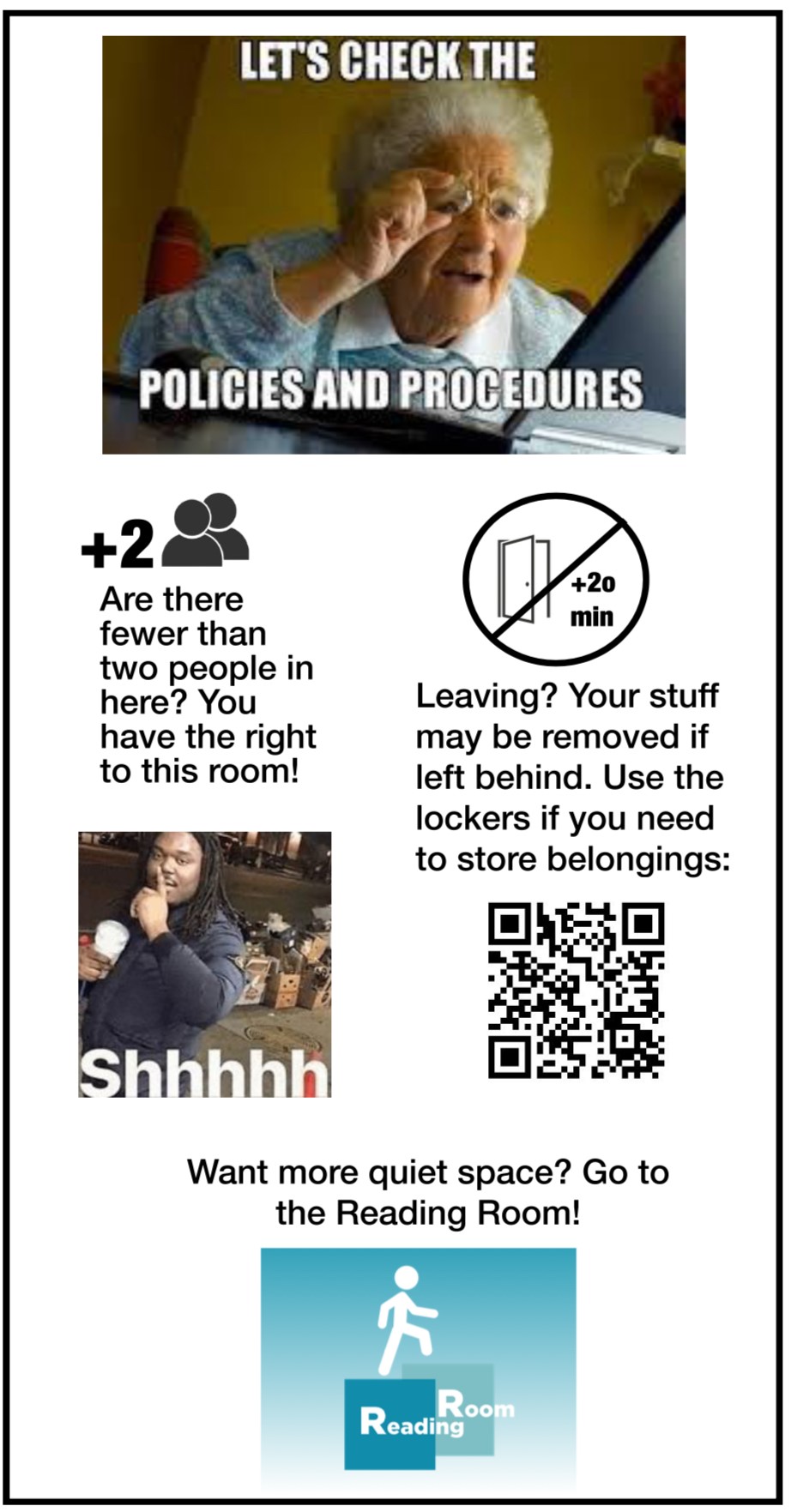
Research revealed that students were largely unaware of the study room capacity rules, leading to minimal usage. We quickly realized that the existing signage failed to clearly communicate the "camping" rules in a way that students would recognize or feel comfortable enforcing. Our intervention introduces humor and eye-catching visuals to engage students, making the guidelines more relatable and intuitive. By normalizing the intended usage of these spaces, we aim to encourage better adherence while keeping the approach lighthearted and effective.
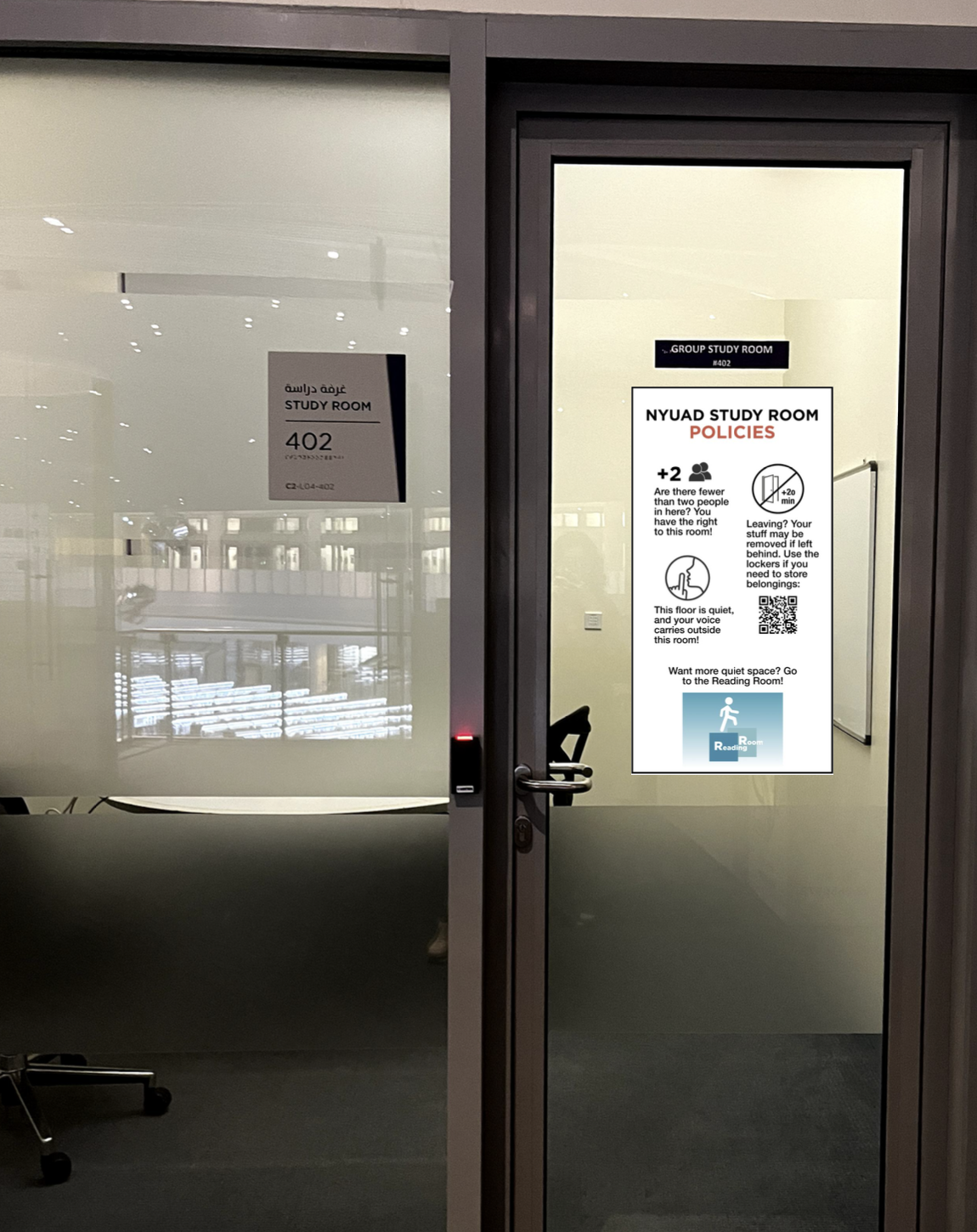
Redesigning for Privacy
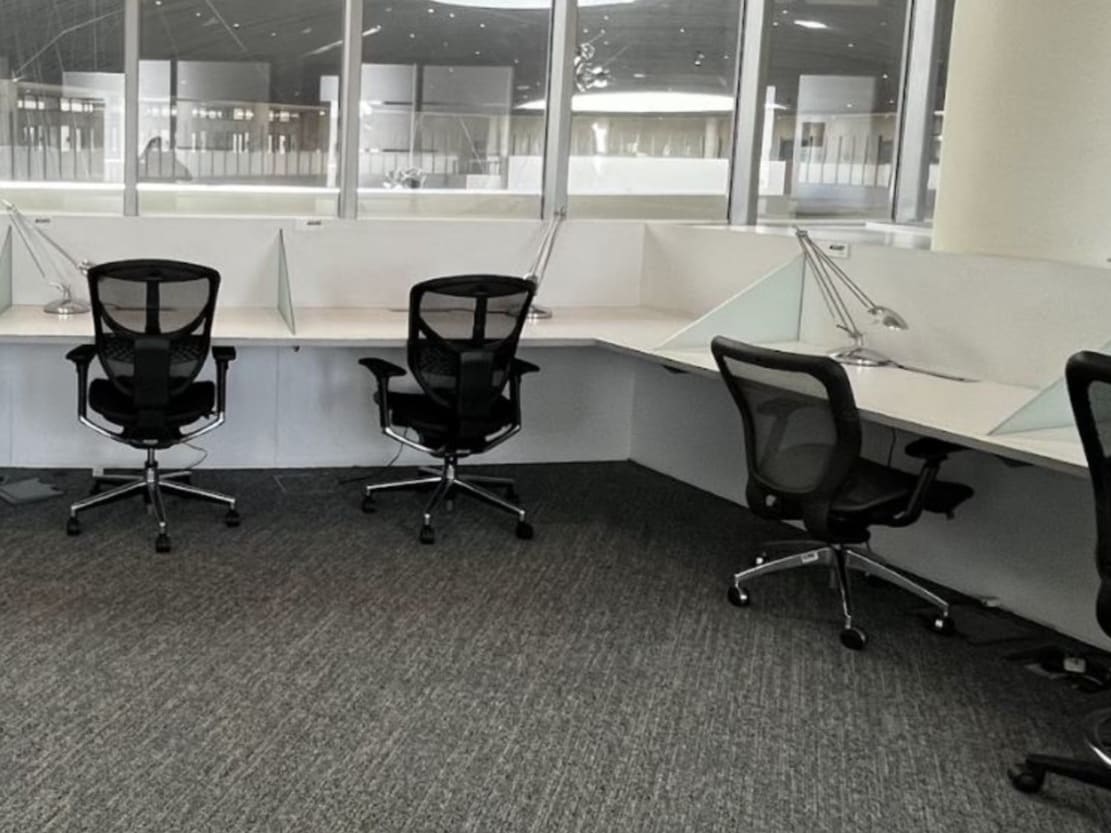
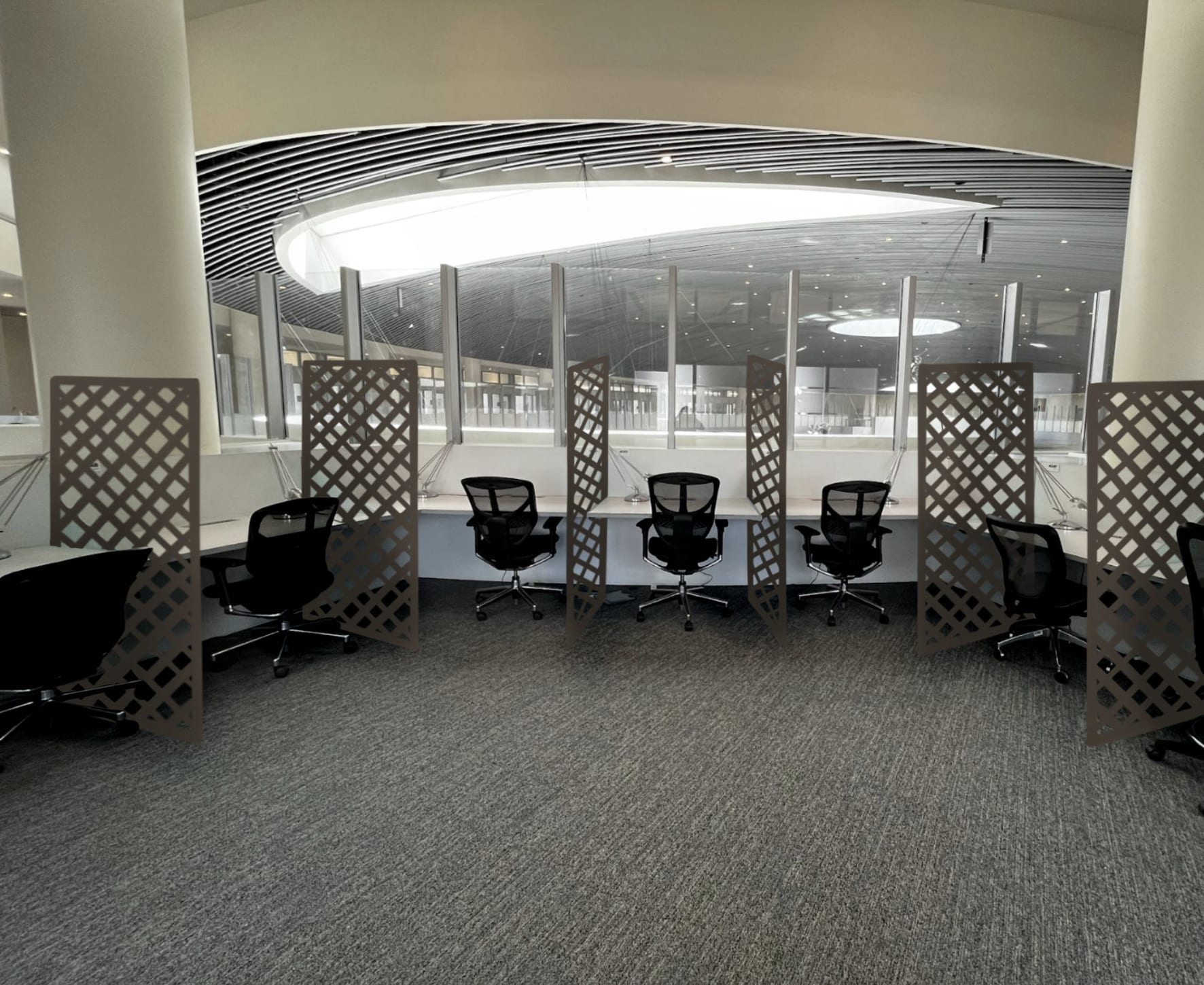
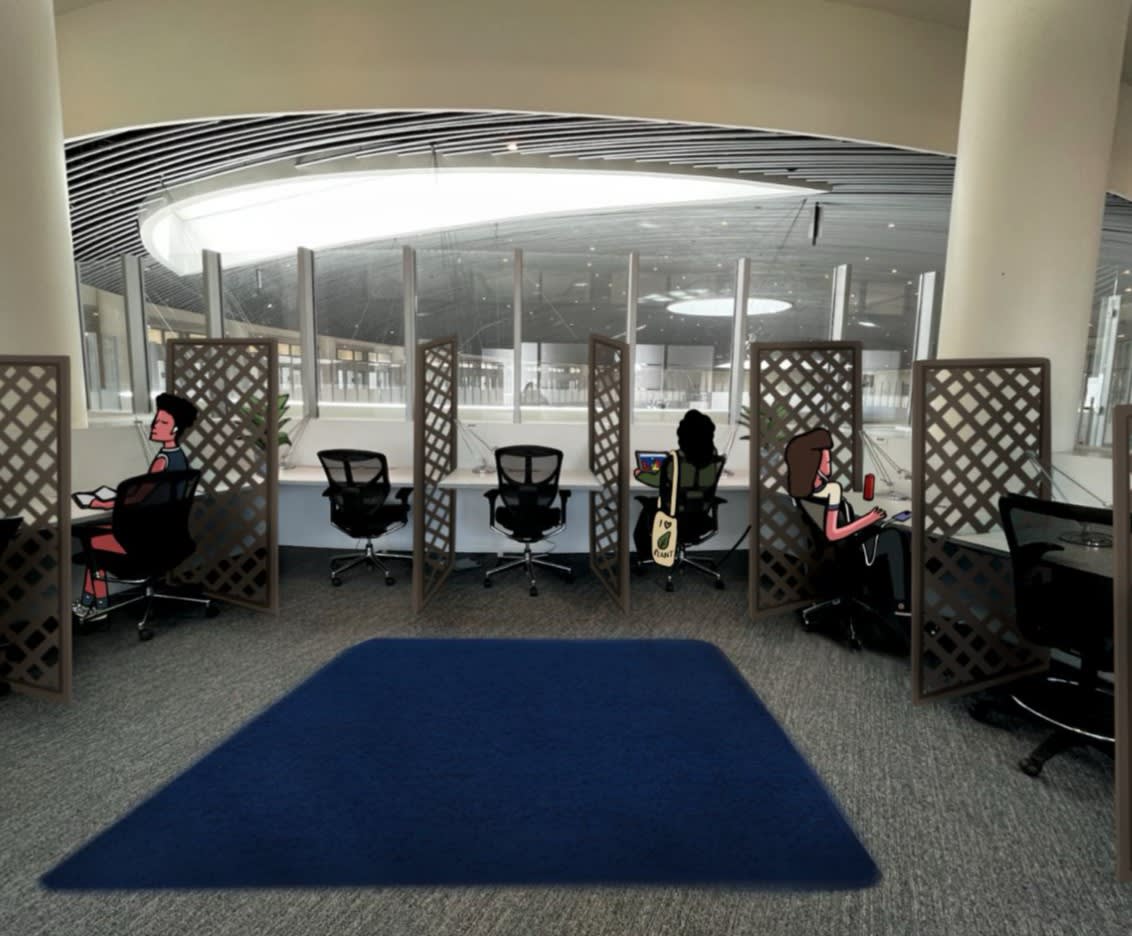
Our third proposal is set to be implemented at NYU Abu Dhabi during the 2024-2025 school year. Despite high demand for quiet study spaces, the hundreds of desks upstairs remain largely unoccupied. Students perceive these areas as too exposed, making them less conducive to focused work. Our solution is simple yet effective: introducing partial barriers to create semi-private study spaces that foster comfort and concentration. These latticed dividers, crafted from reclaimed materials in the campus woodshop, not only enhance privacy but also promote sustainability while transforming the study environment into a more inviting space.
Takeaways
1. Clarify spatial expectations by aligning directional signage with the library’s circular architecture. Most existing signage proposals did not complement the space’s flow. Integrating signage into the environment—such as pillar-based designs that blend into walls—creates a more intuitive wayfinding experience.
2. Limited opportunities for semi-private study taught us that
increasing seating options does not necessarily translate to
perceived availability. In the unused upstairs spaces, the seating
did not align with students' actual needs, highlighting the
importance of functional study areas.